
Anhanga is an important creature in Tupi-Guarani mythology. It is seen as a powerful, sometimes feared, guardian of the South American wilderness. This spirit mainly protects animals and punishes people who hunt too much or harm the forest’s creatures. Meeting Anhanga is often viewed as a sign of bad luck or a result of upsetting the natural balance.
Summary
Overview
| Attribute | Details |
| Name | Anhanga |
| Alternative Names | Anhangá, Añangá, An-hang, Anhanguera |
| Similar Monsters | Caipora, Curupira, Leshy, Silvanus, Tapio, Moss People, Woodwose, Green Man, Basajaun, Skogsrå, Boruta, Veles, Madremonte, Chullachaqui, Mohan, Korrigan, Puck, Huldra, Yurei, Faun |
| Etymology | Tupi: “An” (spirit) and “anga” (old or soul), often translated as “old spirit” or “wandering soul.” |
| Gender | Genderless (often manifests as male or female) |
| Classification | Spirit / Guardian |
| Species | Spectral / Shapeshifter |
| Origin / Culture | Tupi-Guarani (Brazil and Paraguay) |
| First Recorded | 1560 – Letters of José de Anchieta |
| Active Period | Always active (primarily nocturnal) |
| Size | Variable due to shapeshifting |
| Diet | Metaphysical (Tobacco and offerings) |
| Habitat | Dense tropical rainforests and riverbanks |
| Powers & Abilities | • Shapeshifting • Invisibility • Illusion casting • Madness induction • Control over animals |
| Weaknesses | • Tobacco offerings • Respectful hunting practices • Specific incantations • Salt |
| Reproduction / Creation | Primordial spirit of the forest |
| Behavior | Protective guardian and punisher |
| Pop Culture | Folclore (TV Series), Invisible City (Netflix), Tainá (Film), various Brazilian literature |
Description
Anhanga is a spiritual being seen as the ruler of the plants and animals in the Amazon and Atlantic forests. It does not have one set form like living creatures, but exists as a force within the environment. Its main job is to make sure people treat the forest and its creatures with respect.
Anhanga is not evil by nature but follows a strict sense of justice. It punishes people who kill nursing animals, hunt more than they need, or damage the forest without reason. Hunters may fear it, but many also respect Anhanga as a symbol of the wild and sacred power of nature, which exists apart from human society.
The Mythical Creatures Bible. Flash Sale – Up to 23% OFF!
This beautifully designed paperback is the ultimate reference to legendary beings across history and cultures: From Biblical leviathans and behemoths to Asian kitsune, European fae, African tricksters, and ancient chimeras. Alphabetical entries with vivid illustrations, cultural context, and fascinating facts – essential for witchy libraries, ritual symbolism, or creature design inspiration.
Etymology
The name Anhanga comes from the Tupi language, which is part of the Tupi-Guarani language family. It combines “an,” meaning spirit or shadow, and “anga,” which can mean soul or old. In indigenous beliefs, the word first described spirits living in the physical world, different from gods in the sky.
In colonial times, Jesuit missionaries translated Anhanga as “devil” or “demon” to help convert indigenous people to Christianity. This changed the meaning to fit Christian ideas of evil. Still, in the original Tupi view, Anhanga was simply a strong forest spirit that could be neutral or protective.
How to Pronounce “Anhanga” in English
The name is usually pronounced as an-HANG-ah or ah-nyahng-GAH. The “nh” sounds like the “ny” in “canyon” or the Spanish “ñ.” The last “a” is short and soft, but in some Portuguese dialects, people stress the previous syllable more.
Appearance
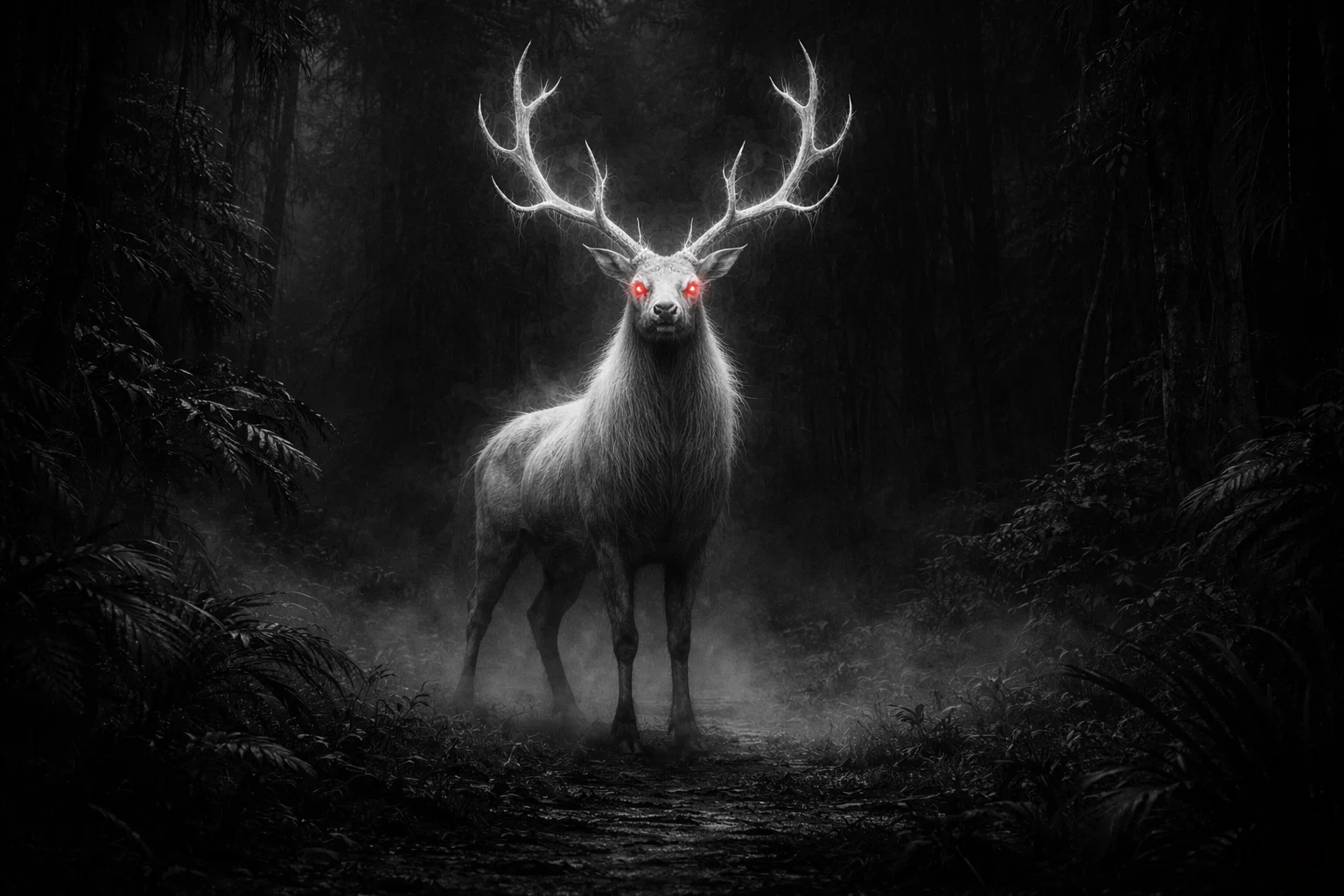
Anhanga is most often described as a large, white deer. This stag has glowing red eyes and sometimes a cross-shaped mark or antlers that seem to shine. Its white color makes it stand out from other animals in the forest.
Besides appearing as a deer, Anhanga can also take the shape of other animals, like a large jaguar, a tapir, or a bird. When it looks human, it often has features that blend into the shadows or feet that face backward, a trait seen in other Brazilian forest spirits. Sometimes, it is just an invisible presence, known only by a sharp whistle or sudden silence in the forest.
Powers & Weaknesses
Powers
Anhanga can change its shape at will, turning into different animals or becoming completely invisible. It can also control forest animals, sometimes leading them away from hunters or making them turn on those who chase them.
One of Anhanga’s main powers is creating strong illusions. For example, it can cause a hunter to see a loved one instead of an animal, leading them to accidentally hurt their own family. People also say that looking into Anhanga’s red eyes can cause madness or a dangerous fever.
Weaknesses
Anhanga follows a strict code and cannot harm people who hunt carefully and respect the forest. The best way to stay safe is to follow traditional hunting rules. Indigenous stories say that giving tobacco, which is sacred, can calm or distract Anhanga.
Leaving a bundle of tobacco at the forest’s edge or at a crossroads is believed to help travelers pass safely. People also think that using salt or certain herbal drinks can keep Anhanga away from campsites.
S. Petersen’s Field Guide to Lovecraftian Horrors Hardcover – Up to 24% OFF!
A beautifully crafted hardcover “field guide” to the terrors of the Cthulhu Mythos by RPG legend Sandy Petersen. Over 100 pages of exquisite full-color artwork depicting classic and obscure entities, with scientific-style entries on appearance, behavior, weaknesses, and distribution. Indispensable reference for Keepers, players, or anyone fascinated by eldritch horrors.
Myths, Legends & Stories
The Birth of the Forest Shadow
Long ago, before there were cities or clearings, the great spirit Monan made the world and the forests. To protect the earth’s creatures from people’s growing hunger, the forest’s shadow came together to form the first Anhanga. This spirit was not born from flesh, but from the shared will of the trees and animals.
After it appeared, Anhanga became a silent watcher. At first, it walked with the first people, showing them which animals were sacred and when to rest from hunting. But as hunters grew greedy, Anhanga retreated into the shadows and became a punisher instead of a guide.
The Hunter and the White Deer
One famous legend tells of a skilled but cruel hunter. He hunted for sport, not for food, and often left animals to rot. One evening, he saw a beautiful white deer in a clearing. Its coat shone like moonlight, and its eyes glowed like embers. Ignoring warnings that a white deer was a spirit, he chased it.
He chased the deer for hours, going deeper into the jungle where sunlight never reached the ground. Each time he tried to shoot, a mist would blur his sight or a branch would snap, warning the deer.
At last, the deer stopped by a river. The hunter shot his arrow, sure he would hit. When the arrow landed, the deer’s image disappeared, and in its place was the hunter’s own mother, who had come looking for him. The spirit had tricked him as punishment, making him see that his prey was his own family.
The Whistle in the Night
In Amazon rubber-tapping communities, people often tell stories about the “Anhanga Whistle.” They say that if someone stays too late in the forest collecting latex, they might hear a high, musical whistle coming from every direction at once.
In one story, a worker heard the whistle and thought it was a friend. As he followed the sound, the trees seemed to move, and his path disappeared. He wandered in circles for three days, always hearing the whistle just ahead. When people found him, he was in shock, his hair had turned white, and he could only talk about the red eyes watching him from above.
The Jesuit Confrontation
In the 16th century, European missionaries added new stories to the legend. Jesuits wrote about the “Anhangá,” seeing it as the Christian Devil. In one story, a priest tried to exorcise a part of the forest where local converts would not hunt. He said he saw a shadow that his torches could not light up.
The legend says Anhanga did not run from the cross. Instead, it appeared as a white stag and walked through the priest’s camp, knocking over his religious items. This story helped build Anhanga’s reputation in colonial records as a spirit that could not be driven away by outside religions.
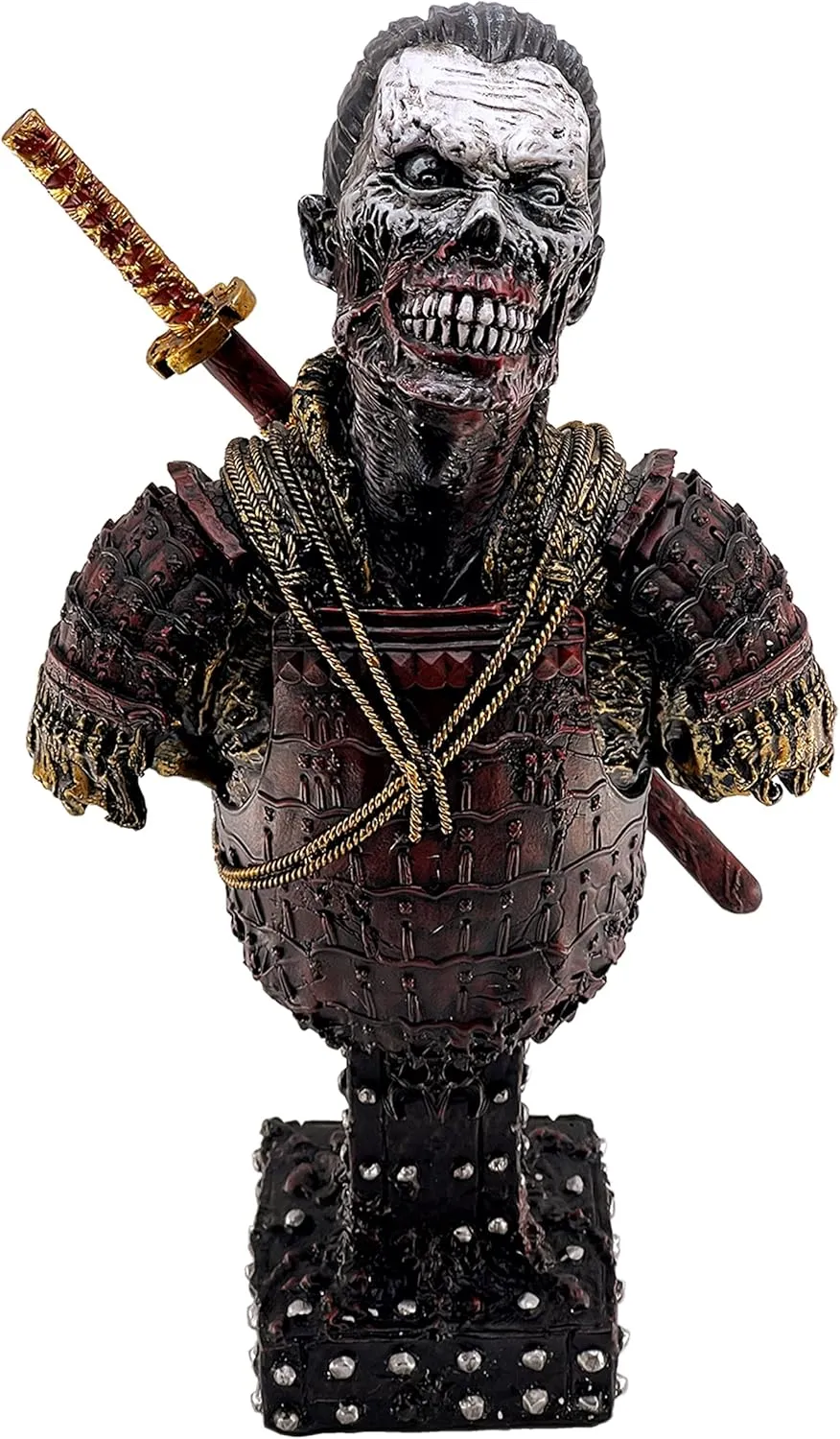
Undead Japanese Samurai Zombie – Limited Edition Resin Statue
Command attention with this intricately crafted Japanese-style Oni mask warrior sculpture from LOOYAR. Hand-painted resin/PU material captures the terrifying horns, fangs, and armored menace of the legendary demon guardian. Perfect for altars, shelves, desks, or gothic displays – a striking blend of folklore horror and samurai strength for home or office decor.
Symbolism
Anhanga is a strong symbol of balance in nature and the results of human greed. It stands for the idea of the “Inviolable Wild,” meaning nature can only give so much and will fight back if pushed too far.
The white deer often stands for purity and the sacredness of life, while its red eyes show nature’s power to take revenge. More broadly, Anhanga reminds people of their deep connection to the land and that humans are only guests in the wild, bound by its ancient rules.
Can Anhanga Be Defeated?
According to lore, Anhanga cannot be defeated for good because it is the spirit of the forest itself. As long as the forest lives, so does Anhanga. Still, people can protect themselves or avoid its anger by following certain rituals and behaviors.
The most common way to stay safe is by using tobacco. Indigenous people and later settlers believed that blowing tobacco smoke into the air or leaving dried leaves on a stump would calm the spirit. This act, called “paying the forest,” shows respect for Anhanga and usually makes it go away.
Another way to protect yourself is by using special plants and charms. Carrying a “figa” (a fist-shaped charm) or wearing clothes rubbed with strong-smelling herbs is believed to hide a person’s spiritual scent from Anhanga. Some traditions also say that turning your clothes inside out or walking backward can confuse the spirit and keep it from following you.
In the end, the best protection is to practice “fair hunting”—only take what you need and never kill a mother animal with young. People say that those who follow these rules are safe from Anhanga’s anger.
Tags:
Related Monsters…
December 9, 2025
February 5, 2026
Black Annis (Blue Hag of Leicestershire)
February 18, 2026
Azhi Dahaka (Persian Three-Headed Dragon)
January 19, 2026
Aswang (Philippine Vampire Shapeshifter)
January 14, 2026
