
The Aspidochelone is a legendary sea creature so large that sailors often mistake it for an island. Stories about this deceptive beast have appeared in bestiaries and maritime folklore for centuries, warning travelers about the dangers of the deep sea. Its legend appears in texts from many parts of the world, connecting ancient natural history with medieval religious stories.
Summary
Overview
| Attribute | Details |
| Name | Aspidochelone |
| Alternative Names | Aspidodelone, Aspidoceleon, Aspidochelon, Fastitocalon, Saratan, Jasconius, Turtle-whale, Island-whale |
| Similar Monsters | Leviathan, Kraken, Zaratan, Hafgufa, Lyngbakr, Jasconius, Devil-whale, Cetus, Makara, Taniwha, Shen, Bake-kujira, Umibōzu, Iku-Turso, Cthulhu, Great A’Tuin, Akupara, World Turtle, Dragon-turtle |
| Etymology | From Greek ‘aspis’ = shield/asp + ‘chelone’ = turtle |
| Gender | Genderless |
| Classification | Cryptid, Hybrid |
| Species | Beast |
| Origin / Culture | Greek and Medieval European |
| First Recorded | c. 2nd Century CE – Physiologus |
| Active Period | Always active |
| Size | 1–5 kilometers in length |
| Diet | Small fish and maritime crews |
| Habitat | Open ocean and deep sea |
| Powers & Abilities | • Camouflage as landmass • Emitting a sweet scent to lure prey • Intentional submersion to drown victims |
| Weaknesses | • Fire on its back • Exposure of its eyes |
| Reproduction / Creation | Primordial birth |
| Behavior | Solitary ambush predator |
| Pop Culture | D&D 5e Monster Manual (as Aspidochelone/Zaratan), Final Fantasy series, “The Adventures of Baron Munchausen” (1988), Pokémon (Torterra/Lapras influence) |
Description
The Aspidochelone is a huge sea creature known for its stillness and for tricking people. It acts as a living trap by lying motionless on the ocean’s surface for long stretches of time.
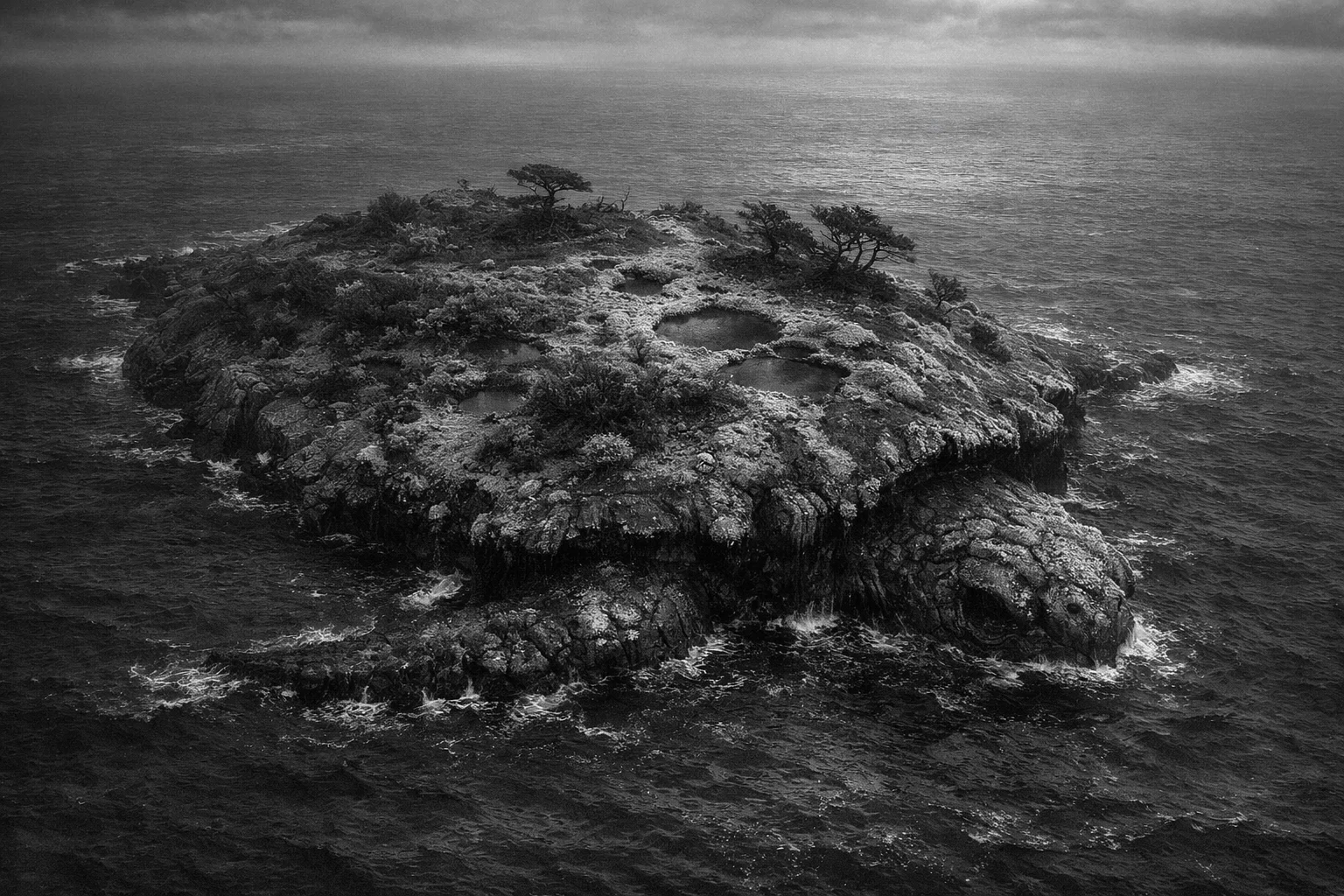
Because it stays so still, sand, debris, and plants build up on its back, making it look like a small island or a big rock. Instead of chasing prey, it waits for unsuspecting victims who think they have found land.
When sailors mistake it for an island, the Aspidochelone becomes a danger to ships and people. It is so large that it can have its own small ecosystem on its back. Most stories describe it as a unique creature that shows how risky and unpredictable the open ocean can be.
Bulfinch’s Mythology Leather-Bound Classics Edition – Up to 43% OFF!
Own the timeless masterpiece in luxurious flexi leather-bound format from Canterbury Classics. Thomas Bulfinch’s complete compilation: The Age of Fable (Greek/Roman gods & heroes), The Age of Chivalry (King Arthur & knights), and Legends of Charlemagne – over 800 pages of elegantly retold ancient myths, Norse lore, and medieval romances. Gilded edges, ribbon marker, and premium binding make this a stunning heirloom for occult libraries or dark academia shelves.
Etymology
The name “Aspidochelone” comes from Ancient Greek. “Aspis” means a round shield, and “chelone” means turtle or tortoise. Together, the name means “shield-turtle,” which points to the creature’s hard, protective back.
In medieval Latin and other languages, the name changed several times. In the Anglo-Saxon Physiologus, it is called “Fastitocalon.” Despite these changes, the name always refers to the creature’s likeness to a giant, armored reptile or a shielded sea animal.
How to Pronounce “Aspidochelone” in English
Aspidochelone is pronounced as-pid-oh-kuh-LOH-nee in English, with the stress on the fourth syllable. The “ch” is said with a hard “k” sound, as in many Greek words.
Appearance
The Aspidochelone is described as a huge sea creature, much larger than any known marine animal. Its most noticeable feature is its large, rough back, which is covered in thick scales or a hard, rocky shell.
Over time, its back gathers silt, sand, and soil, which lets moss, shrubs, and sometimes even small trees grow. To someone at sea level, the creature looks just like a real island.
Beneath its disguise, the Aspidochelone looks like either a giant sea turtle or an ancient whale. Its skin is thick and rough, often covered with barnacles and coral. It has big, strong flippers or fins to move its huge body, but it rarely uses them while hunting. Its mouth is so large that it can swallow whole schools of fish or even ships.
Powers & Weaknesses
Powers
The Aspidochelone’s main power is its ability to blend in with its surroundings. It can float perfectly still, making a stable surface that can hold people and their gear.
Besides its camouflage, the creature can release a sweet-smelling scent from its mouth. This smell attracts fish and other sea animals, which then swim right into its mouth.
The Aspidochelone is also extremely strong and can survive the high pressure of deep water. When it dives, it creates a huge whirlpool that pulls everything on its back down with it.
S. Petersen’s Field Guide to Lovecraftian Horrors Hardcover – Up to 24% OFF!
A beautifully crafted hardcover “field guide” to the terrors of the Cthulhu Mythos by RPG legend Sandy Petersen. Over 100 pages of exquisite full-color artwork depicting classic and obscure entities, with scientific-style entries on appearance, behavior, weaknesses, and distribution. Indispensable reference for Keepers, players, or anyone fascinated by eldritch horrors.
Weaknesses
Aspidochelone’s main weakness is is sensitivity to heat and fire. Since its back is often covered with soil and plants, sailors sometimes mistake it for a good place to camp. If they light a fire, the heat eventually reaches the creature’s skin or shell, causing it pain and making it dive underwater.
Although its skin is almost impossible to pierce, its eyes are said to be weak spots. Some stories also say the creature is very slow and spends so much time resting that it cannot react quickly to anything except direct harm or strong heat.
Myths, Legends & Stories
The Primordial Manifestation
In the oldest Mediterranean creation stories, the Aspidochelone was seen as a leftover from the world before it was ordered. Unlike the Greek gods on Olympus, it belonged to the monstra marina. These creatures existed before the Earth’s crust became stable.
Ancient sailors told stories about “moving islands” in the Atlantic and Indian Oceans, which they believed were actually a single, giant turtle. This creature acted as a boundary between the known world and the unknown depths.
Early stories say the creature did not hunt in the usual way, but instead showed how dangerous and unpredictable the sea could be. It was said to have appeared when the first waters were separated from land.
The Physiologus and the Christian Allegory
The most important written account of the Aspidochelone is found in the Physiologus, a teaching text from Alexandria written around the 2nd century CE. This book, which inspired later medieval bestiaries, includes two main stories about the creature.
The first story is about the “Island Trap.” It tells how, worn out by rough seas, sailors see the creature’s back as a safe place. They tie up their ships and get out to rest, even anchoring into its tough hide, not realizing it is alive.
As soon as the sailors light a fire, the heat goes through the creature’s thick skin, and it dives into the sea. In the Physiologus, this story is a warning: the “island” stands for the Devil, the sailors are people who are not careful, and the fire is a symbol for temptations that can lead to spiritual danger.
The second story is about the “Sweet Breath.” The Aspidochelone opens its mouth and lets out a wonderful smell that draws in small fish, which then swim right into its mouth. But larger, wiser fish know it is a trick and stay away. This story was used to show that strong believers are not fooled by temptations, while the weak-willed are easily caught.
The Voyage of Saint Brendan and Jasconius
In the 9th-century Irish story Navigatio Sancti Brendani Abbatis, the creature is called Jasconius. In this version, Saint Brendan and his monks find the beast while looking for the “Isle of the Blessed.” The story is told in a more organized, repetitive way.
According to the legend, the monks landed on the creature’s back every year for seven years to celebrate Easter. The beast stayed completely still, serving as a floating church for them. It only moved when they tried to cook food.
Unlike the evil version in the Physiologus, Jasconius is shown as a grand but still dangerous servant of the divine. Brendan says the creature is always trying to connect its head to its tail, like the Ouroboros, which stands for the endlessness and cycles of time in the ocean.
Ultimate Family Co-op Adventure – Horrified: Universal Monsters
Ravensburger’s acclaimed co-op Horrified Board Game masterpiece: Defend against Dracula, The Mummy, Invisible Man, and other icons in a beautifully themed village. Tactical pick-up-and-deliver gameplay, escalating tension, and endless variety. Ideal gateway game for families & friends, 1-5 players, 10+, with 4.8/5 star rave reviews.

The Anglo-Saxon Fastitocalon
In the Old English poem The Whale from the 10th-century Exeter Book, the creature is called Fastitocalon. This version gives more details about what it looks like. The poet says its skin looks like “rough stone” and its body is like “great sea-reeds” or “sand-dunes.”
The Anglo-Saxon story adds a sense of psychological horror. It tells how sailors are tricked into thinking they have found solid land with forests and valleys. The poem highlights the moment the creature dives, calling it the “ocean-strider” that drags the men down into the deep sea.
The Arabic Saratan and the Voyages of Sindbad
In Islamic stories, especially in the works of Al-Jahiz and the 1001 Nights, the creature is called Saratan, which means “crab” or “giant turtle” in Arabic. In the first voyage of Sindbad the Sailor, a story much like the European ones takes place: Sindbad and his companions land on a “wooded island” that turns out to be a giant turtle.
Arabic legends add that the creature is so old that full-grown trees have taken root on its back, with their roots reaching deep into its shell. This explains why sailors are so easily fooled—the “island” has its own plants and animals.
In Al-Qazwini’s 13th-century book The Wonders of Creation, Saratan is said to be so big that when it moves its flippers, it causes the tides and shifts the sands along the coast.
Symbolism
The Aspidochelone is a strong symbol of deception and the false sense of safety in the world. In medieval Christian stories, it often stood for the Devil. Just as the creature tricks sailors into thinking it is safe, only to pull them under, the Devil was believed to tempt people with pleasures before leading them to ruin.
Its sweet breath was seen as a symbol for flattery or false promises. The creature also stands for the vast and mysterious ocean, showing that nature holds things far beyond what people can understand or control.
Can Aspidochelone Be Defeated?
Fighting an Aspidochelone is almost impossible because of its size—a human weapon is like a needle against a mountain. Instead, survival depends on recognizing the creature and using certain ways to keep it away.
Old sea stories say the only way to “defeat” the creature is to stop it from diving while you are on its back. Since it only dives when disturbed by fire, the best way to stay safe is to avoid landing on it at all. Sailors were told to watch out for “islands” without birds or those that seemed to drift with the current.
Some traditions say that loud noises, like ringing bells or blowing trumpets, could scare away sea monsters. Using iron or special blessed objects was also believed to keep deep-sea creatures away.
If someone is trapped on the creature, stories say that stabbing its eyes or blowhole might stun it for a moment, giving a chance to escape. Still, the Aspidochelone is usually seen as an immortal or nearly immortal force of nature that cannot be killed by humans.
Tags:
Related Monsters…
Behemoth (Middle Eastern Biblical Beast)
February 13, 2026
Al-mi’raj (Arabian Horned Beast)
February 2, 2026
Argus Panoptes (Hundred-Eyed Giant)
January 13, 2026
Acheri (Indian Disease Spirit)
January 29, 2026
