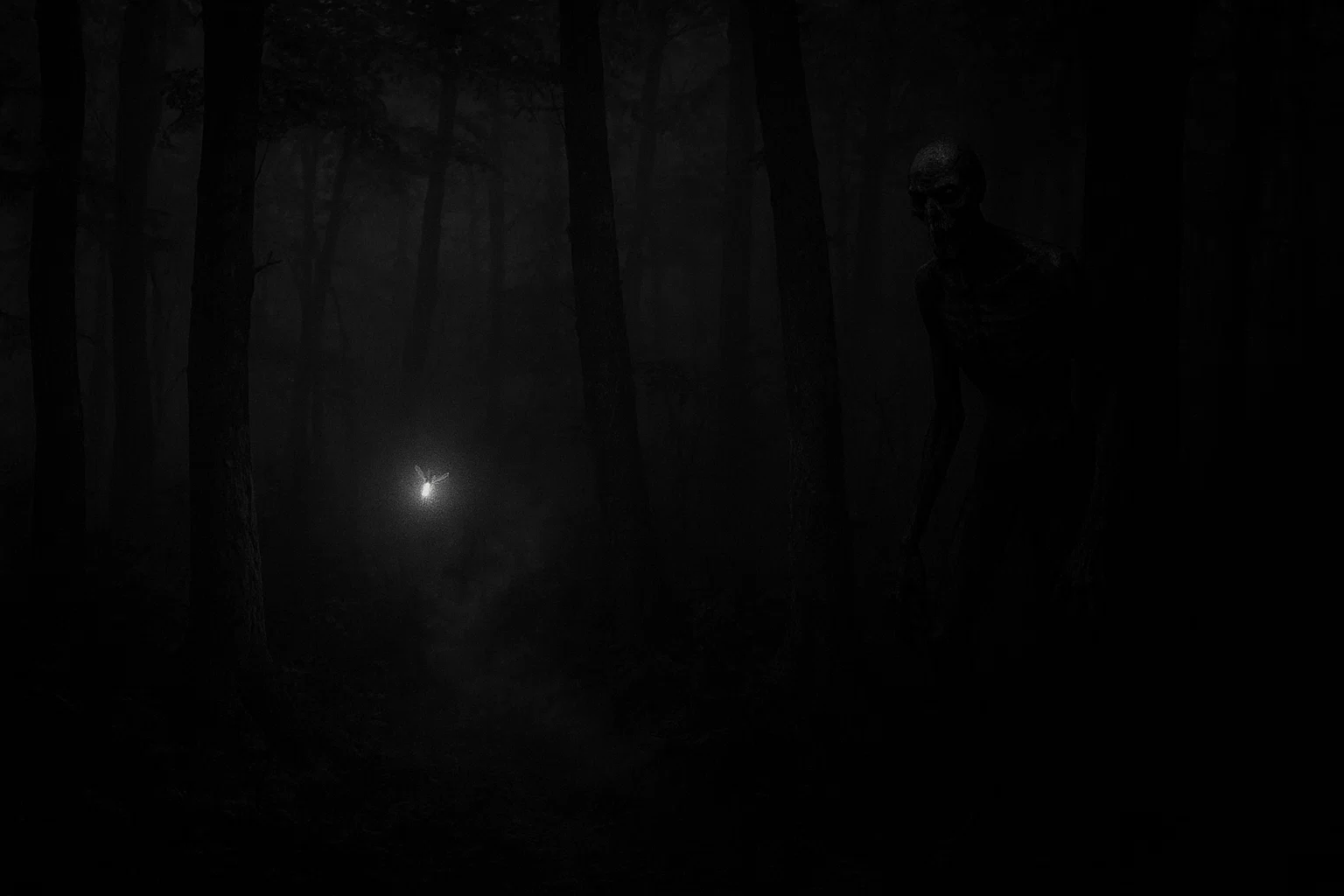

The Adze is a terrifying folkloric entity originating from the Ewe people of Ghana and Togo. Predominantly recognized as a parasitic, vampiric entity, the creature is among the strangest entities in African mythology.
Its fame comes from its ability to shift between a mundane, insectoid form and a terrifying, malevolent humanoid spirit, primarily active under the cloak of night. This metamorph-like ability allows the creature to move undetected among human settlements, making it an ever-present, though often unseen, danger.
Summary
Overview
| Attribute | Details |
| Name | Adze |
| Alternative Names | Adze-Firefly |
| Similar Monsters | Asanbosam, Obayifo, Impundulu, Aberewa, Sasabonsam, Loup-Garou, Tlahuelpuchi |
| Etymology | Ewe language: Literal meaning is not definitively recorded; often translated contextually as a type of stinging or biting insect, potentially linking to its firefly form. |
| Gender | Male |
| Classification | Spirit / Shapeshifter |
| Species | Hybrid |
| Origin / Culture | Ewe (Ghana and Togo) |
| First Recorded | Oral Tradition: First described in written anthropological records in the early 20th century, though the lore is significantly older. |
| Active Period | Nocturnal |
| Size | In firefly form: typically the size of a human thumb. In spirit form: roughly human-sized. |
| Lifespan | Unknown |
| Diet | Blood (physical) and Life force / Essence (metaphysical) |
| Habitat | Urban and rural environments, often dwelling in the thatched roofs or walls of victim’s homes |
| Powers & Abilities | • Shapeshifting into an insect or spirit form • Invisibility to everyone except the person it possesses • Draining vital essence (metaphysical) • Causing illness and disease |
| Weaknesses | • The use of palm oil, particularly to coat the roof or walls of a home • The capture and containment of the insect form (usually by a spiritual expert) |
| Reproduction / Creation | It is said to be the transformed spirit of a witch or sorcerer; the insect form is the soul/essence of the evil person. |
| Behavior | Nightly ambush predator that targets children and the weak |
| Pop Culture | Dungeons & Dragons 5e (Monster Manual entry and stat block) / “Supernatural” TV series (S10E05) / World of Darkness roleplaying game (various references) |
Description
The Adze is a dangerous vampiric spirit known in the folklore of the Ewe people. Unlike many Western vampires, the Adze is primarily characterized by its ability to transform into a harmless-looking insect—typically a firefly—during its active, hunting phase.
By day, the creature is believed to live in the body of a seemingly normal person, a witch or sorcerer, who may be anyone in the community. At night, the spirit of this individual detaches and assumes the insect form to carry out its attacks.
Its viciousness manifests as the insect-form seeking out a sleeping victim (usually a small child) to drain their blood and metaphysical life force. Beyond blood consumption, the monster is also held responsible for spreading disease, famine, and general societal misfortune.
Bulfinch’s Mythology Leather-Bound Classics Edition – Up to 43% OFF!
Own the timeless masterpiece in luxurious flexi leather-bound format from Canterbury Classics. Thomas Bulfinch’s complete compilation: The Age of Fable (Greek/Roman gods & heroes), The Age of Chivalry (King Arthur & knights), and Legends of Charlemagne – over 800 pages of elegantly retold ancient myths, Norse lore, and medieval romances. Gilded edges, ribbon marker, and premium binding make this a stunning heirloom for occult libraries or dark academia shelves.
Etymology & Origins
The precise etymological root of the Ewe word “Adze” is not a matter of consensus in written records. However, it is often interpreted in context to refer to a stinging or biting insect, consistent with its firefly manifestation.
In terms of origins, the name is deeply embedded in the traditional spiritual beliefs of the Ewe people (which extend across modern Ghana and Togo).
In fact, the whole concept can be linked to the broader West African tradition of witchcraft and spiritual vampirism. In this belief, a person’s spirit (often called the ‘sunsum’) can leave the body at night to cause harm.
The monster, because of that, is not a separate species but the malevolent spirit of a witch who has actively chosen to use their power for selfish and destructive purposes. This lore predates colonial contact and has been sustained through oral tradition for generations.
Appearance
The Adze has two primary appearances: its deceptive hunting form and its terrifying spirit form.
Its most common form is that of a firefly or a similar glowing, winged insect. This is the manifestation of the witch’s spirit as it leaves the body to hunt. This insect form is generally unremarkable, with a small body and wings.
Still, it glows with an unnatural, pulsating light, often described as a pale blue or red, which acts as a marker of its presence. When in this firefly form, the Adze is believed to be able to pass through the cracks and openings of a house with ease.
If the insect form is trapped, captured, or wounded, it is said to revert to its terrifying spirit form or humanoid state. This is described as a spectral, ghostly entity, slightly larger than a human, often gaunt and dark, and sometimes with a skeletal or excessively thin frame. In this form, it may have a distinctly distorted mouth or sharp teeth, reflecting its vampiric nature, and may emit a fearsome cry.
Powers & Weaknesses
Powers
The Adze’s primary power is its exceptional ability to shapeshift, allowing it to alternate between a small, insectoid firefly form and a spectral, humanoid spirit. In its firefly form, the Adze can achieve invisibility to everyone except the individual it intends to possess or influence, making it notoriously difficult to track.
Crucially, the Adze does not merely feed on blood but also has the power to drain the metaphysical life essence or soul of its victim. This results in extreme fatigue, wasting diseases, and, eventually, death.
What’s more, the presence of the Adze is believed to be a source of various curses and misfortunes, including crop failure, drought, and the spread of devastating, untreatable diseases throughout a community.
Weaknesses
The Adze, being an entity of powerful witchcraft, has documented traditional weaknesses embedded in spiritual countermeasures.
The most common defense against an Adze attack is the use of palm oil. The oil is typically smeared on the thatched roof, walls, or entryways of a home. Lore holds that the Adze, in its firefly form, is attracted to the oil. Still, if it attempts to drink it, it becomes nauseated or immobilized and is forced to revert to its human form.
This is believed to trap the witch’s spirit inside the home. Additionally, capturing the insect form itself—often in a clay pot or sealed vessel—is a guaranteed way to subdue the monster. Once caught, the witch or sorcerer whose spirit is the Adze is compelled to reveal themselves to the community, often by appearing physically ill or in pain at the time of the Adze’s capture.
Myths, Legends & Stories
The Midnight Attack
A prominent piece of folklore tells of the Adze’s nightly routine. An Adze, which is the spirit of a known witch in the village, leaves the witch’s body while they sleep.
The spirit takes the form of a firefly. It flies silently to the home of a target family, typically entering through the thatched roof. The Adze prefers to feed on the blood of sleeping children, which gives it metaphysical strength. Still, it also consumes the vital ‘sunsum’ or life force of adults.
The symptoms of an attack are often described as a wasting illness, night sweats, and a persistent fever. If the Adze is not repelled, the victim soon weakens and dies. The death is then blamed not on a conventional illness but on the invisible, soul-draining actions of the Adze.
Enchant Your Space with Witchy Gothic Posters – Up to 40% OFF!
Transform your bedroom into a creepy dark sanctuary with this vintage gothic wall art set from 97 Decor. Unframed prints featuring spooky witch pictures, horror goth aesthetics, Halloween motifs, and moody occult vibes. Premium quality posters perfect for creating a haunting witchy room decor gallery – ideal for empaths, goths, and Halloween lovers.
The Trial of the Witch
One tale details the process of identifying the human witch behind the Adze. A skilled spiritual expert or diviner is called into a village that has suffered multiple mysterious deaths or illnesses. The diviner sets a trap, often involving a bowl of palm oil placed near the victim’s sleeping area.
The Adze, in its firefly form, is lured by the oil. When the Adze tries to consume the oil, it is either repelled or, more often, is forced to assume its human form. The diviner then binds the trapped spirit in an amulet or container.
The next morning, the witch whose spirit was trapped is found in their own home, gravely ill, injured, or confessing to their misdeeds, because their spirit was unable to return and reanimate their body correctly. The community then performs a traditional ritual to neutralize the threat and may banish or execute the revealed witch.
The Sound of the Cough
A specific detail in the lore is the noise the Adze makes. When the Adze has drained enough blood, it is believed to fly out of the victim’s home. As it escapes, it emits a distinctive sound, described not as the buzz of an insect but as a cough.
This cough is said to be the only auditory clue that the creature has successfully fed and is now leaving the home, warning the family that a spiritual attack has just occurred, though they often hear it too late. The cough signifies the repletion and satisfaction of the evil spirit.
Symbolism
The Adze primarily serves as a profound cultural embodiment of the hidden, malevolent forces within the community. It symbolizes the danger of unrecognized evil disguised by familiarity, as the creature is the spirit of a person who is outwardly a part of society.
The transformation into the common, flickering firefly points out the theme that the greatest dangers often come in the most innocuous or mundane forms, suggesting that danger can literally fly right into one’s home.
The Adze also functions as an explanation for unexplained illness, sudden death, and localized disaster, providing a tangible, spiritual focus for societal fear and the consequences of unchecked greed and envy manifested as witchcraft.
Tags:
Related Monsters…
Acheri (Indian Disease Spirit)
January 29, 2026
Aswang (Philippine Vampire Shapeshifter)
January 14, 2026
February 17, 2026
February 4, 2026
Akaname (Japanese Filth-Licking Yokai)
January 5, 2026
January 12, 2026
